Ibero-America moves towards protecting women’s rights
Working on inclusive and democratic policies with a gender focus was the center of this Triangular Cooperation initiative.
Prevention and concrete action against violence against women remain a priority in Latin America and the Caribbean. In the specific cases of Bolivia and Costa Rica, this urgency takes on greater relevance given the discouraging figures that highlight the complexity of this problem: in 2025 alone, in Bolivia, there were 78 femicides and more than 44,000 reports of different types of violence against women (RedUno, 2025) and in the first months of 2025 in Costa Rica, there has been a sustained increase in extreme violence, with 36 femicides reported so far this year, according to data from the Gender Violence Observatory of the Costa Rican Judiciary (2025), in addition to thousands of incidents related to domestic and gender violence handled by 911.
These countries have made decisive progress in terms of institutional frameworks to protect and defend women’s rights. On the one hand, Costa Rica’s National Institute for Women (INAMU), operational since 1998, was created in response to the urgent need for an autonomous body capable of combating gender-based violence and discrimination.
On the other hand, in 2019, Bolivia created the Ana María Romero Plurinational Service for Women and Depatriarchalisation (SEPMUD) to respond to social demands to deepen depatriarchalisation and tackle violence against women. Following regulatory updates in 2023, the institution consolidated its autonomy and maintained its responsibility to monitor and evaluate public policies to guarantee women’s rights. Five years after its establishment, the need was identified to strengthen its work through a mechanism that would allow it to follow up on the recommendations of the Convention on the Elimination of All Forms of Discrimination against Women (CEDAW) and provide feedback on existing policies.
The CEDAW Committee issued observations on Bolivia’s 2022 report, which prompted the need to create an inter-institutional platform to facilitate the monitoring and evaluation of these recommendations. Since 2011, INAMU has had a platform for the transfer of methodologies and capacities, and it is from this institutional framework that the opportunity to cooperate on these issues arises.
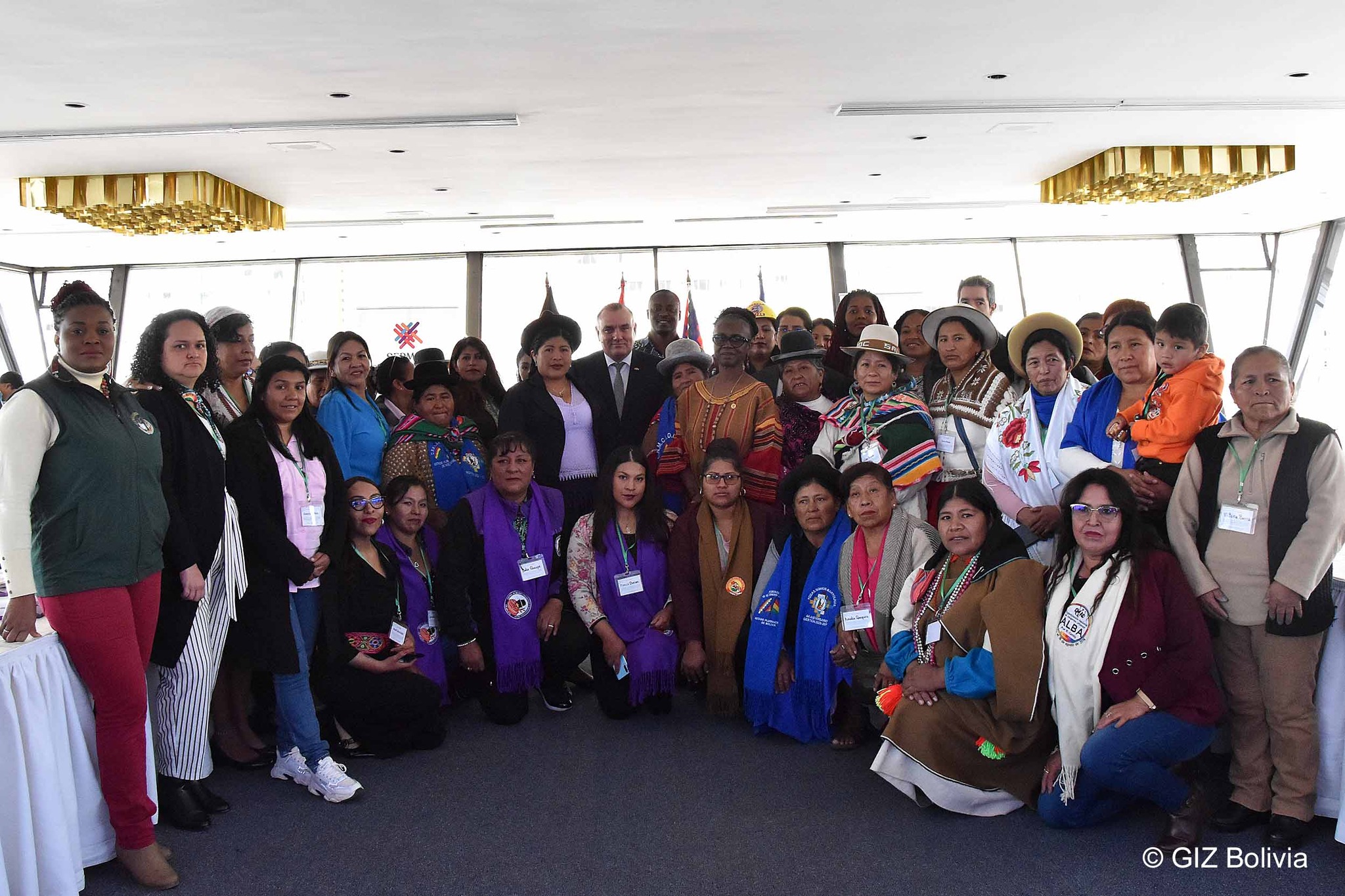
In addition to the efforts of the two countries, German cooperation joined in to implement the Triangular Cooperation project: ‘Exchange between public institutions for the effective fulfilment of women’s rights in Bolivia and Costa Rica’ —known as Co-tri-CEDAW— to strengthen the two Ibero-American countries’ capacities for following up and monitoring commitments to the CEDAW mechanism and coordinating with territorialised work within the framework of decolonisation and depatriarchalisation policies, respectively (GIZ Bolivia, 2024).
The project was carried out between February 2024 and May 2025 and included several measures during its implementation (GIZ Bolivia, 2024):
1. Inter-institutional CEDAW platform in Bolivia
2. Capacity building for SEPMUD
3. Strengthening of reporting and preparation
4. Workshops with women’s social organisations
5. Jointly produced materials
6. Action plan with a territorial focus
The closing event concluded with Bolivia presenting its Guide to Surveying and Reporting Information for Monitoring and Following Up on CEDAW Recommendations, and Costa Rica presenting its document ‘From Weaving to Management: Methodological Guide for Public Policies with Indigenous Women.’
Through this Triangular Cooperation initiative, Ibero-American cooperation contributes to the fulfilment of SDG 1 (No Poverty), SDG 5 (Gender Equality) and SDG 10 (Reduced Inequalities).
March 2026
***
Source: SEGIB based on Agencies and Directorates-General for Cooperation, Gender Violence Observatory of the Costa Rican Judiciary (2025), GIZ Bolivia (2024) and RedUno (2025).
Photos: German Embassy in La Paz.