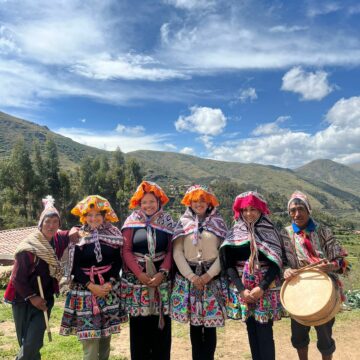
South-South Regional Cooperation strengthens the cotton sector
As part of the Brazil-FAO Cooperation Programme on sustainable agriculture, Egypt, Colombia and Peru have joined forces to improve the cotton value chain.
According to the Food and Agriculture Organisation of the United Nations (FAO, 2026a), cotton is one of the most important commodities on the world market; in Latin America, cotton production accounts for 12 per cent of the global total, making it a significant sector for the economy and for family farming.
Furthermore, according to the South American Cotton Market Report, which analyses the size and key trends of this commodity, Brazil led the sector in 2025, with a 64.8 per cent share (Mordor Intelligence, 2026). In this regard, the country is working in a coordinated manner with various stakeholders to strengthen this sector and, in partnership with the FAO, has established the Brazil-FAO Cooperation Programme, which includes the ‘More Cotton’ project, whose objective is “to contribute to the improvement of the sector in developing countries, focusing on the identification, implementation, monitoring and evaluation of CSS activities and sub-projects to be implemented with MERCOSUR member or associate countries or in other developing countries” (Brazil-FAO Cooperation Programme, 2026).
As part of the Programme’s implementation, last July the Peruvian Government hosted a delegation of experts from Colombia and Egypt to exchange knowledge on certification, traceability, quality assurance and market competitiveness in the cotton sector. The meeting was attended not only by the relevant national authorities but also by research centres, cooperatives and business representatives.
According to the FAO (2026b), the transfer of knowledge and skills focused on how technical cooperation can strengthen the recovery and promotion of Peruvian cotton whilst supporting efforts to position it in national and international markets. Furthermore, the involvement of other developing countries – in this case, Egypt – was key, as this African nation is a leader in cotton production, seed certification and fibre quality.
This event not only addressed each country’s experiences through technical working groups but also included visits to laboratories to observe the processes first-hand. For example, as well as visiting Lima, the delegations visited the Gamarra market (to discuss textiles) and the Piura region (to discuss family farming).
Previously, in late 2025, an initial exchange had already taken place, during which experts from Egypt were able to share their production model with Peru and Colombia, including seed certification systems, traceability and quality control.
The Programme is comprehensive in nature, as it addresses various aspects, ranging from the productive dimension – relating to the entire cotton value chain – to those linked to food security, family farming and the sustainability of cotton cultivation. This initiative helps to align regional CSS with SDG 2 (Zero Hunger) and SDG 17 (Partnerships for the Goals).
August 2026
***
Source: Mordor Intelligence (2026), (FAO, 2026a) (2026b) and Brazil-FAO Cooperation Programme, 2026.
Photos: Trisha Downing in Unsplash